
Clara woke up feeling a little better than yesterday.
Sunlight streamed into her bedroom’s second-floor window. Mother and Father were no doubt downstairs preparing oatmeal. 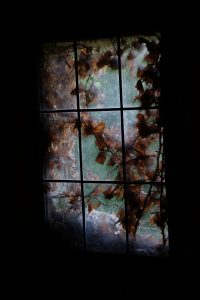
Last night, she’d told her mother she wasn’t feeling well after an evening of playing. Mother felt her forehead and said she had a fever. Clara felt the opposite–she was cold enough to shiver.
Mother covered her up with heavy blankets, then placed a glass of water on the side table. Sleep came easy after that.
Now she felt better, although not perfect. Still a slight fever, still a headache, still chilled, but not as bad as yesterday.
“Mother?”
She pulled away the blankets and got out of bed. A little woozy, she walked to her bedroom door, ready to announce her wellness.
The door was locked.
“Huh?” Clara pulled. She pulled again. The door failed to yield, stuck in the jamb.
“Mother? Mom?” she yelled, wincing from throat burn. “The door’s locked.” She jiggled the handle fiercely. “Mom! Dad!”
No answer.
She stomped her feet in case they were in the kitchen below. Nothing came of it besides sore legs and meager noise, as she weighed less than fifty pounds.
“Mom!” The effort threw her into a coughing fit. She began a pattern of pounding on the door, then pressing her ear against it.
Maybe they didn’t expect her to be up so early and stepped out to get medicine. So, having no choice but to wait, she sat on the floor and read for a while. After half an hour, the panic went away, giving her the chance to think over last night.
Mom made a weird face as she helped Clara change into her nightgown. She hadn’t thought about it at the time–she was too sleepy. Clara pulled up her nightgown. Her thighs and shins were marked up with purple streaks and splotches. Were those there before? She always had a bruise or two somewhere, being a kid. They didn’t hurt when she touched them.
Clara climbed on her toy chest and lifted herself to tip-toe. In the bright morning, the village was pretty as a painting. People and horse-drawn carts trampled down the street. But no parents.
The window was stone framed with diamond panes. It couldn’t be opened and it was too thick to break. But surely they could hear her down below if she yelled. And if that didn’t work, thumping the glass so hard it rattled surely would. But no matter what, no one gave her attention. At first, Clara thought she’d become invisible, but that was childish.
One couple got close to her house–a man in a tricorner hat with a woman in a daisy-white dress.
Clara slammed her fists against the glass. “Hey! Hey, up here! I’m up here. Help me! I’m trapped!”
The man swiveled his head at the sound. The woman looked up and pointed. She locked eyes with Clara.
“Yes! Help me!”
They dropped their heads, then walked away.
“What? No, no! Come back! Please.”
The same thing happened with others–they looked at her but continued on. Why would they ignore her? Did she not look distressed?
The screaming and hammering fatigued her. It helped keep her mind off her stomach twisting into knots. Why weren’t her parents back yet? Maybe they didn’t know her door was stuck. Why hadn’t they taken her with them?
Throughout the hours, she shouldered the door or banged at the window. But the most anyone ever did was look up, look down, then walk away. Sometimes quickly. One even pointed at her door, as if guessing which flat she lived in. Like someone had told them not to help her. If they could see she was in here, why didn’t they help?
She sat on the floor, head leaned against the bed and legs tucked beneath her. Her mouth was sticky, throat still scratchy. Light-headed. Hungry, thirsty.
In the late afternoon, an officer came patrolling towards her flat. She perked up at the sight of the midnight-blue uniform. He would have to help her—it was his job.
Clara used what remained of her strength to scream at the top of her lungs. She beat the window as hard as she could, not worried about cracking it.
“Help me! Help me!”
Before the patrolman got close enough, a woman walked in from the other side, stopping him. They spoke to each other, then she pointed to the house door under Clara.
Yes! They noticed her; they just couldn’t get in. But the officer could. He could break down the door or use a lockpick, or knock it down. They wouldn’t let a little girl stay trapped up here.
The officer nodded to the woman. He approached the flat.
Clara threw her head back and sighed out her tension. If she wasn’t so exhausted and achy, she would have done cartwheels.
The officer walked under the eave of her window and out of view. Clara pressed against the bedroom door and listened for the sound of the door opening.
Nothing.
Worried for the worst, she returned to the window. The officer was walking away.
“Hey! Hey! Come back!”
The officer continued on.
She held her gut as she collapsed on the floor, crying.
#
The town doctor stood before the flat, his medical bag in hand. In the second-floor window, there was no girl.
“The mother and father saw it and quietly left,” said the officer who brought him there. “No one’s seen her for days, so I think we can assume she’s succumbed. Right?”
“Mm,” the doctor said. “Twenty-four hours should be fine.”
“Good,” the officer said. “I’ll unlock the door. You can go up and examine the body.”
“Very good.”
They approached the door. The officer ripped off the government notice titled “Warning: Plague Suspected In This Area” and they went in.
- About the Author
- All Posts by This Author

Eric Juneau is a software engineer and novelist on his lunch breaks. He lives in, was born in, and refuses to leave, Minnesota. You can find him talking about movies, video games, and MCU villains at http://ericjuneaubooks.com where he details his journey to become a capital A Author.